
Ask any Peninsula buyer what a home costs "up on the Hill," and you will get a number that averages four cities, hundreds of micro-pockets, and every price band from a walk-to-village cottage to an oceanfront estate. The number is real. It also explains almost nothing about the offer you are about to write.
The Peninsula is one of the few Southern California markets where the headline median is actively misleading. What you pay is set by the view descriptor in the listing, the pocket the home sits in, and, in 2026, how disciplined your pricing is on the way in.
Trendgraphix data pulled for January through June 2026 puts the gap between the four incorporated cities in plain view. These are averages across every closed residential sale, so they mix cottages and estates, but the spread is the story.
City | Closed sales (Jan–Jun 2026) | Avg. sale price | Avg. list price |
|---|---|---|---|
Palos Verdes Estates | 66 | $3,521,800 (116 listed at avg. $5,521,900) | $5,521,900 |
Rolling Hills Estates | 53 | $1,958,600 (89 listed at avg. $1,470,400) | $1,470,400 |
Rancho Palos Verdes | 176 | $1,766,400, the highest sales volume among the four primary Peninsula cities | — |
Rolling Hills | Limited public trade | Custom estate pricing | — |
Two things jump out. First, RPV is doing roughly three times the transaction volume of PVE at roughly half the average price, which means the "Palos Verdes" market a buyer reads about is really the RPV market wearing PVE's reputation (understanding this is key when choosing the right home). Second, Rolling Hills Estates closed above its average list price on aggregate, while PVE closed well below. Same peninsula, opposite negotiating dynamics.
PVE is 4.78 square miles and roughly 12,559 residents, according to Census QuickFacts referenced in local buyer guides, and the city was shaped by protective restrictions guided by the former Palos Verdes Homes Association and its Art Jury, which is why PVE often feels more curated and more consistent from block to block. That history is not decoration. It is the reason a buyer's dollar behaves differently here.
Homes in Lunada Bay, Malaga Cove, Monte Malaga and Valmonte can perform very differently, even when they have similar square footage. A buyer coming in with $3M can land:
Two homes at the same list price in two of those pockets are not comparable properties. They are separate sub-markets that happen to share a city hall.
RPV is the volume city. It is also the most geographically varied on the Peninsula, spanning about 39,654 residents and 13.47 square miles of land, which means a broader range of neighborhoods, lot types, and home settings. Buyers who think they are shopping one city are actually shopping five or six.
A live example of why local mechanism matters more than headline data: the city has documented land-movement conversations on its south side, and the city's updates say south-side neighborhoods have experienced significant movement, and the city has imposed a temporary prohibition on bicycles, motorcycles, and similar wheeled vehicles on about a 2-mile stretch of Palos Verdes Drive South, a road that typically carries about 16,000 daily trips; as of April 16, 2026, the city reported no active emergency advisories. For a buyer, this is not a hazard story. It is a routing story. The road stretch influences commute times, weekend beach access to Terranea and the coves, and how sellers on either side of that corridor position their listings. Two RPV homes a few blocks apart can read very differently to a buyer depending on which side of that planning conversation they sit.
RPV also has organizational fragmentation on purpose. Neighborhood identity is carried by the Rancho Palos Verdes Council of Homeowners Associations, neighborhood watch efforts, and a landslide working group involving multiple homeowner associations and district boards, so the "HOA experience" a buyer gets varies more here than in PVE.
Rolling Hills Estates ran an average sale price near $1.96M in the first half of 2026 on 53 closes, and continues to attract buyers looking for excellent schools, larger lots, equestrian neighborhoods and convenient access to the rest of the South Bay. It behaves more like an inland South Bay market than a coastal one.
Rolling Hills, by contrast, is a private, gated equestrian city. Trades are infrequent and pricing is bespoke. A buyer who tells an agent "I'm looking in Rolling Hills" and means "Rolling Hills Estates" is off by a full price band and a completely different lifestyle.
Here is the number that reframes everything. In a deep sample of closed sales of homes 5,000 square feet or larger across all four Peninsula cities, three out of four luxury sales in this segment have "Ocean" in the view description. That is not a coincidence. In Palos Verdes, views are a pricing driver (see our guide on oceanfront vs. hillside living for a similar dynamic). And the top of the market is even more concentrated: the $15 million, $17 million, $22 million properties all carry premium view language: Catalina, Coastline, Panoramic, White Water.
Translated for a buyer:
A buyer comparing two 4,500-square-foot homes at the same price, one with "ocean view" and one with "panoramic ocean and Catalina," is not looking at two comparable homes. They are looking at two different products.
For most of the last decade, Peninsula luxury behaved like a seller's market with polite pricing. That has moved. A deep-sample review of 5,000-plus square foot sales showed homes taking much longer to sell, with median cumulative days on market jumping from around 40 days to 119, and buyers negotiating harder (utilizing real estate negotiation strategies), with sale-to-list slipping from about 0.964 to 0.939. Over-ask outcomes dropped, and median pricing on both a total and per-square-foot basis softened versus the prior year.
For a buyer, the practical effect is that discipline pays. A well-priced home still moves; a home priced on last year's momentum sits. The 2.5 percentage-point drop in sale-to-list looks small until you apply it to a $4M list, at which point it is $100,000 of negotiating room that did not exist a year earlier.
For a seller, the same data set makes the case for pricing precision from day one. Even in strong years, this is not a segment where everything sells instantly at or above ask; pricing precision matters, and the typical transaction closes below list. The homes that transact in a reasonable window in 2026 are the ones that respected that reality on launch day rather than after two price reductions. For more details, consult our post on how to set the right price for your home in today's market.
Put the pieces together and a real Peninsula comp analysis looks less like a spreadsheet and more like a decision tree. City sets the outer band. Pocket narrows it. View descriptor sets the ceiling. Days-on-market posture sets the floor.
A 3,800-square-foot home priced at $3.2M in Valmonte with a treetop view is a different negotiation than a 3,800-square-foot home at $3.2M in Monte Malaga with a Catalina view, which is a different negotiation than a 3,800-square-foot home at $3.2M on the RPV south side near the Palos Verdes Drive South corridor. Same square footage. Same price. Three different offers.
Is Palos Verdes Estates always more expensive than Rancho Palos Verdes? On average, yes. Jan–June 2026 average sale prices ran roughly $3.52M in PVE against $1.77M in RPV. But a coastal-view RPV home can trade well above an interior PVE home. Neighborhood and view descriptor beat city name for pricing accuracy.
Which Peninsula city has the most inventory to shop? RPV, by a wide margin. It closed 176 residential sales in the first half of 2026, more than double PVE's 66. If a buyer wants selection, RPV is where the search actually happens.
Do all four cities share the same school district? Both PVE and RPV are served by the Palos Verdes Peninsula Unified School District, which is widely regarded as strong in Los Angeles County. Attendance boundaries can vary by address, so confirm assignment on any specific property.
How much does a view actually add? Enough that in the 5,000-plus square foot segment, roughly three of four closed sales carry "Ocean" in the view description, and the top of the market is dominated by "Catalina," "Panoramic," and "White Water" language.
The Peninsula rewards buyers who stop shopping the city name and start shopping the pocket and the view line. It rewards sellers who price to the 2026 data instead of the 2023 memory. The gap between those two habits is where most of the real money is made or lost on the Hill.
If you would like a pocket-by-pocket read on where your budget goes furthest across the Palos Verdes Peninsula and surrounding areas, or a disciplined pricing plan validated by a home valuation for a home you are preparing to list, Meghan Vittetoe is happy to talk it through. Let's Connect.
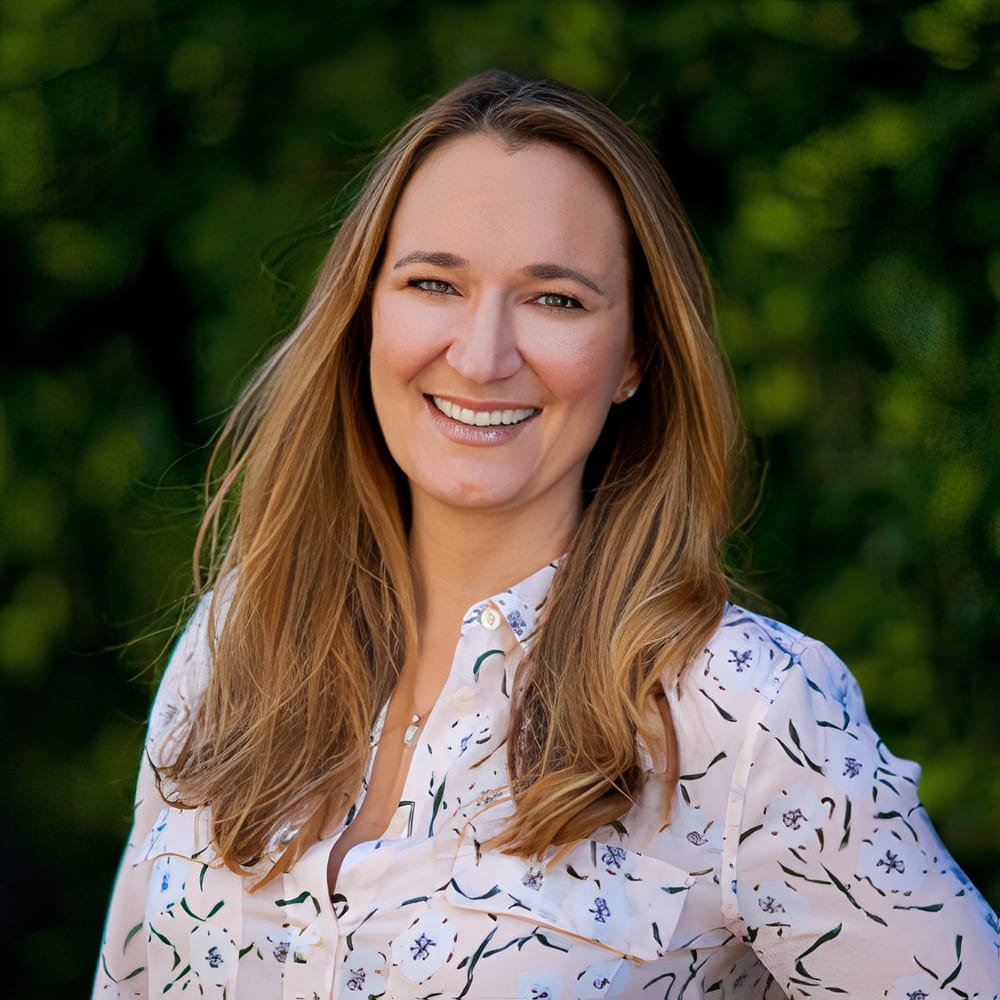
Meghan Vittetoe is a seasoned luxury real estate professional with over 14 years of experience representing clients in Orange County and the Palos Verdes Peninsula. A Southern California native, she combines deep market knowledge with an aggressive marketing strategy to consistently exceed expectations and deliver exceptional results. Known for making each transaction seamless and enjoyable, Meghan is a trusted guide for buyers and sellers navigating the region’s most coveted properties. Outside of real estate, she enjoys life as a dedicated wife and mother, and loves traveling, fitness, fine dining, and spending time with her family and beloved pets.
📍 520 Newport Center Dr., #330, Newport Beach, CA 92660
📞 (949) 246-1813



Compass
520 Newport Center Dr. #330
Newport Beach, CA 92660
Meghan Vittetoe | CA DRE# 01832263