
What does it mean when a duplex on Begonia Avenue sells for $3.3 million while a single-family rebuild a few doors down on Sausalito Avenue closes at $7.38 million, and both listings say Corona del Mar, both sit in the Flower Streets, and both are a five-minute walk to the same stretch of Pacific Coast Highway?
It means the median price you saw on a portal search was never describing one market. It was averaging two.
Corona del Mar's home values get quoted in a range wide enough to make a buyer question the data itself. One national portal put the citywide median list price at $4.44 million as of August 2026. A separate 30-day snapshot of closed sales, taken around the same point this summer, showed a median sale price of $4.4 million with an 87.94 percent sale-to-list ratio, meaning the typical home sold for roughly 12 cents on the dollar under its asking price. Meanwhile, estimates that claim to isolate single-family homes only have landed anywhere from $4.35 million to $7.4 million to a projected $7.7 to $8 million for 2026, depending on which report you read.
None of those figures is wrong. They are measuring different things, because Corona del Mar's Village is not one housing product. It is two, sitting on the same blocks, governed by two different zoning designations, and the city's own code explains why.
Walk the Flower Streets grid and you will pass original 1940s beach cottages, complete contemporary rebuilds, and a substantial number of front-and-back duplexes, sometimes all three within a single block face. A recent listing on Larkspur Avenue offered two full residences on one lot, each with its own garage, laundry, and utilities, built in 2004 but living more like separate homes than a shared structure. A property in Corona Highlands went to market as a triplex on a roughly 5,900-square-foot lot, with each of the three units running about 950 square feet and shared access to the community's private beach.
Those are not outliers. They are common enough in the Village that any buyer comparing "Corona del Mar homes" needs to ask what they are actually looking at before comparing price per square foot (this aligns closely with principles in our ultimate home searching checklist). A recent Flower Streets sale set shows the spread clearly: a duplex on a 3,540-square-foot lot sold for $3.3 million, other nearby sales in the same pocket ranged from about $2.5 million to $4.45 million, and a Sausalito Avenue property reached $7.38 million. Walk a few more blocks toward the bluff and the range widens further. Ocean Boulevard and Bayside properties have closed anywhere from $4.4 million for a smaller home to $15 million and $16.5 million for larger bluff-top estates on lots barely over 6,000 square feet.
That spread is not random. It tracks a zoning line most buyers never think to ask about until they are already in escrow.
Newport Beach's coastal zoning code carves out a specific exception for Corona del Mar that does not apply to the rest of the city. Under the city's residential coastal zoning chapter, a standard single-family lot elsewhere in Newport Beach can build up to 1.75 times its buildable area. In Corona del Mar, that cap drops to 1.5 times the buildable area. The same code also preserves a path to legal duplex construction that predates modern zoning: on any site smaller than 5,000 square feet that existed before March 10, 1976, a two-family dwelling can still be built, provided each unit sits on at least 1,000 square feet of land.
Those two provisions, read together, explain most of what makes the Village confusing to shop. A large share of CdM's original lots are small and old enough to qualify for that pre-1976 duplex allowance, and the R-2 zoning designation that governs much of the Village core exists specifically to permit two dwelling units on a single legal lot. A "single-family home" you're touring on a compact lot may in fact be recorded as one half of a legal duplex, with a different appraisal path, different financing treatment, and a different resale ceiling than the detached cottage next door on a slightly larger R-1 parcel.
The same 1.5x floor area cap also explains why so many CdM homes feel smaller than their price tag suggests (understanding this distinction helps answer how to choose the right home). A buyer comparing square footage against a similarly sized lot elsewhere in Newport Beach, where the standard 1.75 times multiplier applies, is not comparing apples to apples. The lot is doing less work in Corona del Mar, by design.
Here is what that zoning split does to the number every buyer starts with.
What's being measured | Time window | Reported figure |
|---|---|---|
All CdM listings, blended across property types | August 2026 | $4.44M median list price |
Closed sales, trailing 30 days | summer 2026 | $4.4M median sale price, 87.94% sale-to-list ratio |
"Single-family only" estimate, Village-inclusive | 2026 | approximately $4.35M median |
"Single-family only" estimate, hillside-weighted | 2026 | approximately $7.4M median |
"Single-family only" estimate, entering 2026 | early 2026 | $7.7M to $8M projected median |
Notice that the widest gap isn't between the blended market and the single-family market. It's between three different sources that all claim to be measuring single-family homes only, yet land nearly $3.5 million apart. That gap exists because "single-family" in Corona del Mar still spans a detached Flower Streets cottage on a compact R-1 lot and a custom estate in Irvine Terrace or Spyglass Hill on a lot two to three times the size. Fold in more Village cottages and the median drops. Weight toward the hillside and bluff tracts and it climbs. The zoning code doesn't just explain the duplex-versus-detached split. It explains why even the detached-only slice of this market refuses to sit still.
The zoning story matters more this year because the balance of power has shifted. Days on market in Corona del Mar stretched to a median of 109 days as of August 2026, roughly double the 47 days reported for a March 2026 snapshot earlier this year. The same 30-day closed-sale window from this summer showed zero percent of CdM homes selling above list price, a sharp swing from the same period a year earlier, and just under 40 percent of active listings had taken at least one price reduction.
That shift gives buyers something they didn't have as recently as this spring: room to ask the zoning question before writing an offer, rather than discovering the answer during appraisal (for a deeper dive into the valuation process, see what you need to know about home appraisals). Pricing discipline still separates winners from homes that sit. Properties that go under contract inside the first two weeks have continued to close near full asking price, while those that linger past a month have settled closer to 94 percent of list, a gap wide enough to matter on a $4 million purchase. In a market moving this way, a buyer who understands what they're actually comparing has real negotiating room, not just patience.
Before you compare price per square foot across two CdM listings, a few questions settle the product-type question fast.
None of this changes what a home is worth to you as a place to live. It changes whether you're comparing it to the right set of homes when you decide what to offer.
Does buying one half of a legal duplex affect financing? Lenders often treat a recorded duplex unit differently from a fully detached single-family home for appraisal and comparable-sales purposes. Confirm with your lender early how the specific parcel is recorded before you assume your rate and terms will match a standard single-family purchase.
Can a duplex-zoned lot in Corona del Mar be converted back to one home? In principle, since R-1 uses are permitted within the same coastal zoning framework, but any redesign still runs through the same floor area calculation, and consolidating two units into one does not automatically grant extra buildable square footage. The city's planning department can confirm a specific parcel's entitlement history.
Does a lower price in the Village mean a lesser location? Not necessarily. The Begonia Avenue duplex and the Sausalito Avenue rebuild sit close enough together that both offer the same walk to Sherman Library and the shops along PCH. The price gap reflects product type, lot configuration, and construction era more than it reflects one street being better than the other.
If you're comparing Corona del Mar to another Newport Beach or South Orange County neighborhood on median price alone, you're comparing a number that changes meaning depending on which zoning line it happened to average in. The more useful question is which product type fits your plans, a detached R-1 home with room to build, or a legal duplex that trades some future flexibility for a lower entry price in the same walkable Village.
If you're trying to figure out which side of that line a specific property sits on, or what your own CdM home might be worth once its zoning and lot history are factored in, Meghan Vittetoe can walk through the parcel-level details with you before you write an offer or list. You can also browse current homes and neighborhood detail, get a sense of what changed in the Village this season in our recent look at what's new in Corona del Mar, or start with a home valuation if you're the one deciding what your property's zoning is actually worth in today's market.
This article is general information, not legal, tax or financial advice. Consult a qualified professional about your situation.
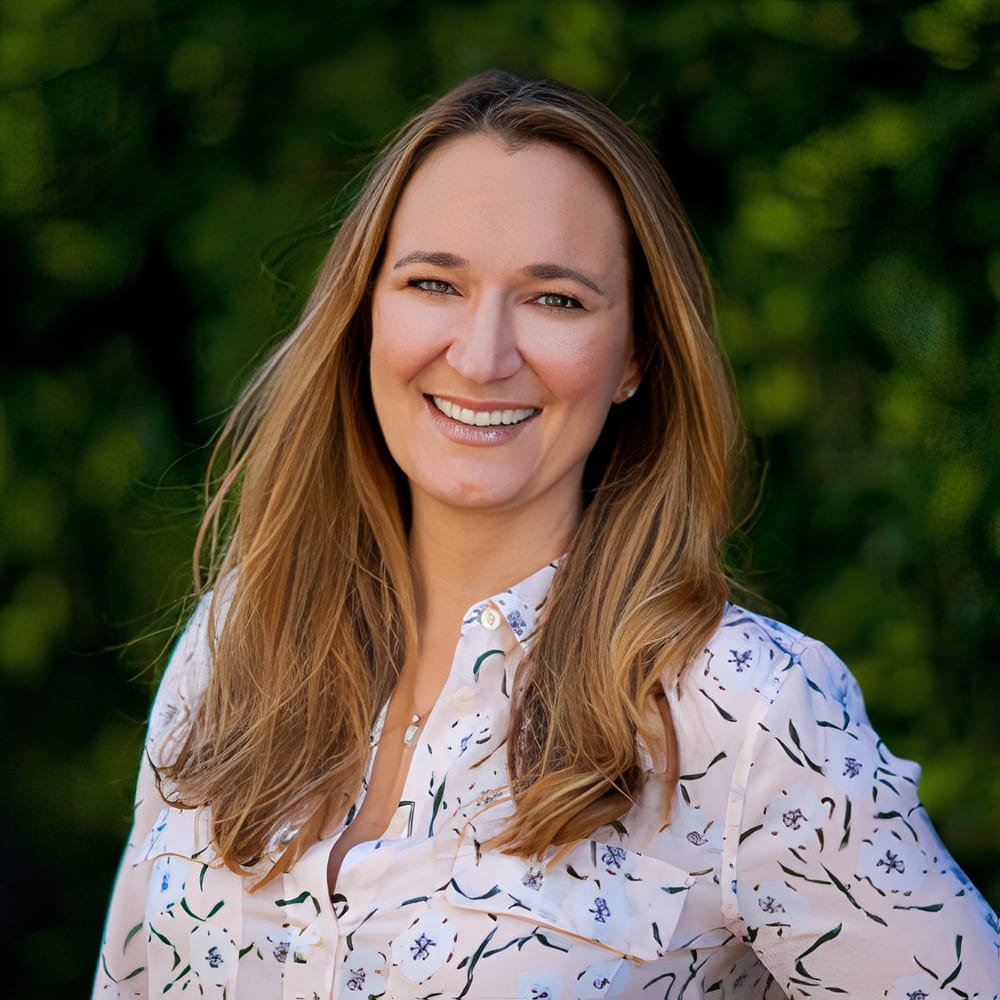
Meghan Vittetoe is a seasoned luxury real estate professional with over 14 years of experience representing clients in Orange County and the Palos Verdes Peninsula. A Southern California native, she combines deep market knowledge with an aggressive marketing strategy to consistently exceed expectations and deliver exceptional results. Known for making each transaction seamless and enjoyable, Meghan is a trusted guide for buyers and sellers navigating the region’s most coveted properties. Outside of real estate, she enjoys life as a dedicated wife and mother, and loves traveling, fitness, fine dining, and spending time with her family and beloved pets.
📍 520 Newport Center Dr., #330, Newport Beach, CA 92660
📞 (949) 246-1813



Compass
520 Newport Center Dr. #330
Newport Beach, CA 92660
Meghan Vittetoe | CA DRE# 01832263